

Methodology and AI disclosure
This text was prepared with the assistance of artificial intelligence, which connected the broader historical setting with family records, the lineage chart, and sources collected by the family.
It is a narrative historical synthesis for the family portal, not a transcription of a single archival document.
How the history was assembled
The material draws on the lineage chart compiled by Duško Nonković in 1999; scholarly studies by Lovorka Čoralić, Radoslav Tomić, and Milenko Krešić; a regional work by Trpimir Macan and material by Radovan Jerković published in Mile Vidović’s edited volume; Friedrich Heyer von Rosenfeld’s 1873 armorial; works by Hinko Hranilović and Dragutin Hirc and by Andrija Kačić Miošić; and the Croatian Encyclopedia.
Where archival evidence is discussed, the portal relies primarily on published scholarship: Krešić draws on records held by the Archivio Storico di Propaganda Fide in Rome, while other cited studies refer to holdings in the State Archives in Zadar and Dubrovnik. The Archivio di Stato di Venezia preserves the institutional records most likely to contain patents and related decisions concerning Nikola and Vule Noncovich, although their exact shelfmarks have not yet been verified.
The chronology of the negotiations and migration from 1684 to 1687, the knightly patents of 1691/92 and 1696, the principal family buildings, and the main generational relationships were compared with published archival research and the family chart.
Roman numerals beside names in the narrative follow the generations marked on Duško Nonković's lineage chart, with Serdar Nikola designated as Generation I.
Accuracy and evidentiary limits
Most dates, offices, migrations, military events, and family relationships are based on cited published sources and Duško Nonković’s lineage chart. Published scholarship documents the Venetian knighthoods of Nikola and Vule Nonković, while Rosenfeld records the family’s later noble and comital status. Contemporary family members have not yet obtained copies or exact archival shelfmarks of the original Venetian patents and related decisions; locating them would clarify their complete wording, dates, and provisions.
Some details—including particular burial identifications and information preserved only in the family chart—require further documentary confirmation. Frane Nonković’s reported cavalry manoeuvre at Dubrovnik is explicitly presented as oral family tradition. Descriptions of motives, social conditions, and the broader meaning of events are historical interpretations based on the available evidence.
Family members and researchers are invited to provide documented corrections and additional records, and the narrative will be revised as further evidence becomes available.
1. The frontier and the exodus — to 1687
Roots in Herzegovina
Long before the historic migration toward the Adriatic, the roots of the Nonkovic clan lay deep in the turbulent borderlands of Ottoman eastern Herzegovina. The family's ancestral home was in Broćanac, within the old districts of Zažablje and Popovo beside the wetlands of Hutovo Blato. [Tomić 2006, p. 177][Hranilović and Hirc 1905, p. 619]
Broćanac and the wider Zažablje region belonged to the Catholic parish of Gradac in the Diocese of Trebinje–Mrkan. The inhabitants lived in a Dinaric, predominantly pastoral world, and the wealthier households built their fortunes through livestock, pasture management, and horse caravans that carried goods down to the Adriatic ports. [Krešić 2006, pp. 108–109]
Complete property ledgers for the earliest Nonkovic household have not survived. Yet the position of a frontier commander—expected to finance weapons, equipment, and fighting men—was beyond the reach of an ordinary peasant household. The family's military rise points to a strong economic base, a wide network of allies, and the ability to command armed retainers.
Serdar Nikola Nonković — Generation I
On this dangerous seam between the Ottoman Empire and the Republic of Venice, Nikola Nonković (Generation I; his father is not recorded in the lineage chart) rose to a position of exceptional regional power. The Ottoman authorities appointed him Serdar of Zažablje—a local military chief and guardian of order. [Krešić 2006, p. 107]
Family and regional records associate his authority with thirty villages and the allegiance of as many as 740 fighting men. Such power rested on more than an appointed title: it depended on personal reputation, the resources of his household, and the loyalty of men who accepted Nikola as their commander. [Krešić 2006, p. 107]
An indirect account referring to material in the Dubrovnik archives connects Nikola Nonković and his contemporary Draško Matić with a major retaliatory action against villages of the Dubrovnik Littoral in 1667, following destructive Uskok raids. At that time Nikola still operated within the Ottoman frontier order, defending the territory and interests entrusted to him. The episode belongs to an earlier and more complicated period of his life, before his transfer to Venetian service.
Faith and family tradition
In the deep Herzegovina hinterland under Ottoman rule, the family belonged to the Roman Catholic community of Gradac parish in the Diocese of Trebinje–Mrkan. The diocesan priests Don Petar Dragobratović and Don Jure Sentić later played important roles in the negotiations and crossed toward Opuzen with Nikola, showing how closely church and family networks were intertwined. [Krešić 2006, pp. 108–109][Krešić 2006, p. 109]
St. John the Baptist and St. Nicholas held a special place in family devotion. That attachment would later become part of the family's physical legacy through the Church of St. John on Osinj and the Chapel of St. Nicholas at Klek. [Tomić 2006, p. 177][Tomić 2006, p. 177]
Negotiations with Venice and the migration, 1684–1687
The year 1684 began a process that would change the family's destiny three years later. With the outbreak of the Great Turkish, or Morean, War, Serdar Nikola (Generation I) began considering a transfer to Venetian authority. It was a daring political and military gamble: failure would have meant certain destruction. [Krešić 2006, pp. 107–109]
On May 27, 1684, Nikola wrote to Provveditore Pietro Valier about conditions in the Neretva, Zažablje, and Herzegovina and outlined plans for military cooperation. After a meeting at Opuzen on November 25, the priest Petar Dragobratović, acting as Nikola's representative, concluded the first agreement with Valier on December 4, 1684. Negotiations continued through a new agreement made by Jure Sentić at Zadar on March 9, 1686, and a final compact at Sućuraj on July 19, 1687. [Krešić 2006, pp. 107–109]
The migration was finally carried out in late July 1687. Nikola crossed toward Opuzen with his sons; the Catholic diocesan priests Don Jure Sentić and Don Petar Dragobratović; approximately 250 armed men; and their families. Krešić, citing Macan, reports an estimate of approximately forty families, while his account of Jerković gives about 2,000 people, a figure Krešić considers probably exaggerated. The sources clearly show that part of the extended clan and local population remained in Herzegovina. [Krešić 2006, p. 109][Krešić 2006, p. 109, note 30][Macan 1990, p. 49 — cited by Krešić][Jerković in Vidović 2000, p. 134 — cited by Krešić][Tomić 2006, p. 177]
Ottoman retaliation was swift and devastating. Krešić's study, drawing on church and regional records, reports that emptied villages were plundered and burned, that the rebels' relatives suffered especially, and that people caught with their livestock in the mountains were left unprotected. A second migration followed in the autumn of 1688, when more than seventy additional families reached Venetian territory in the Neretva valley. [Krešić 2006, p. 109]
2. The Knights of St. Mark and the age of fortresses — 1687–1715
The Morean War
Reaching the lower Neretva did not remove the displaced clan from the war. Nikola (Generation I) transformed his followers into a mobile Venetian auxiliary force, while his sons Vule and Jure (Generation II) fought beside him on the front line. [Croatian Encyclopedia]
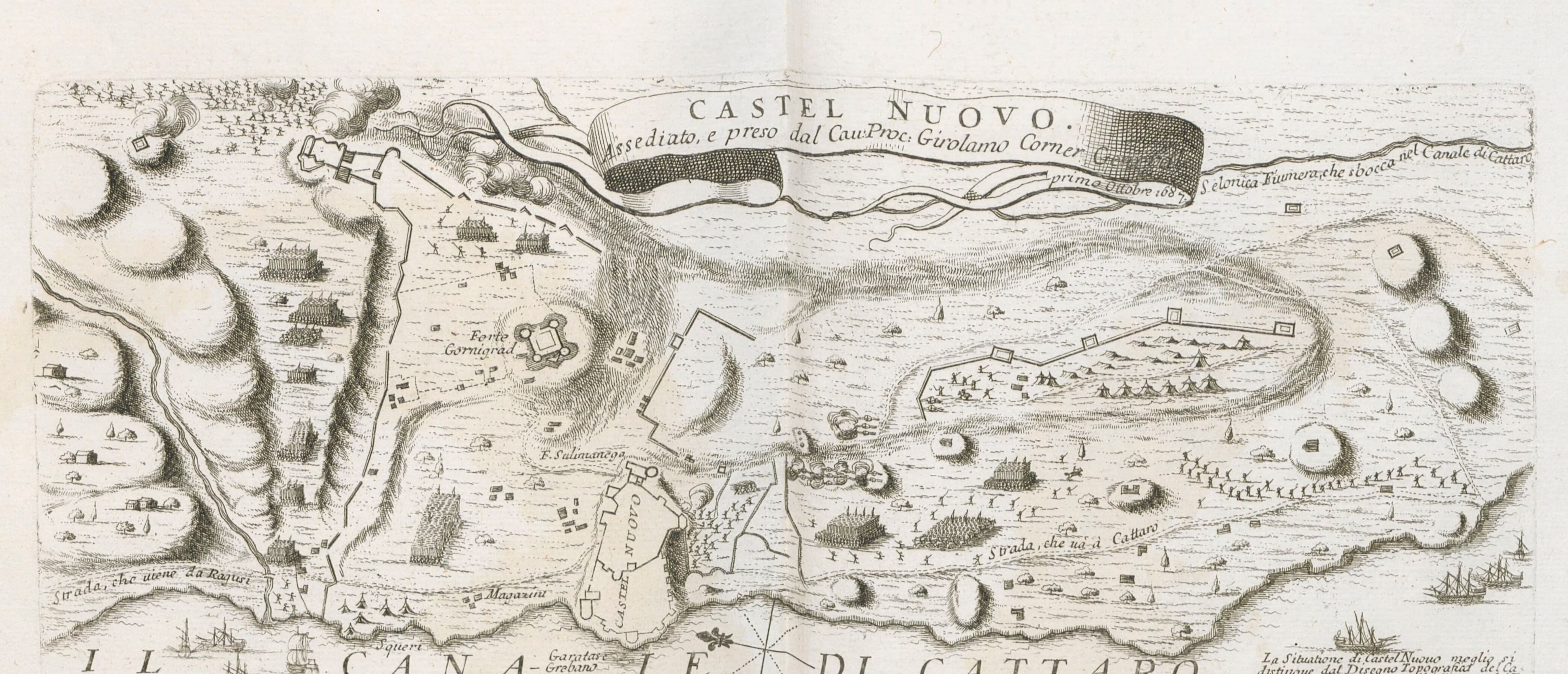
The Nonkovic fighters knew the roads, mountain passes, and weaknesses of the Ottoman hinterland. They served as scouts, guides, and auxiliaries alongside the main Venetian army. War struck the family directly at Herceg Novi in 1687, where Jure (Generation II, son of Nikola) was killed, while his brother Vule continued their father's military service. [Tomić 2006, p. 177]
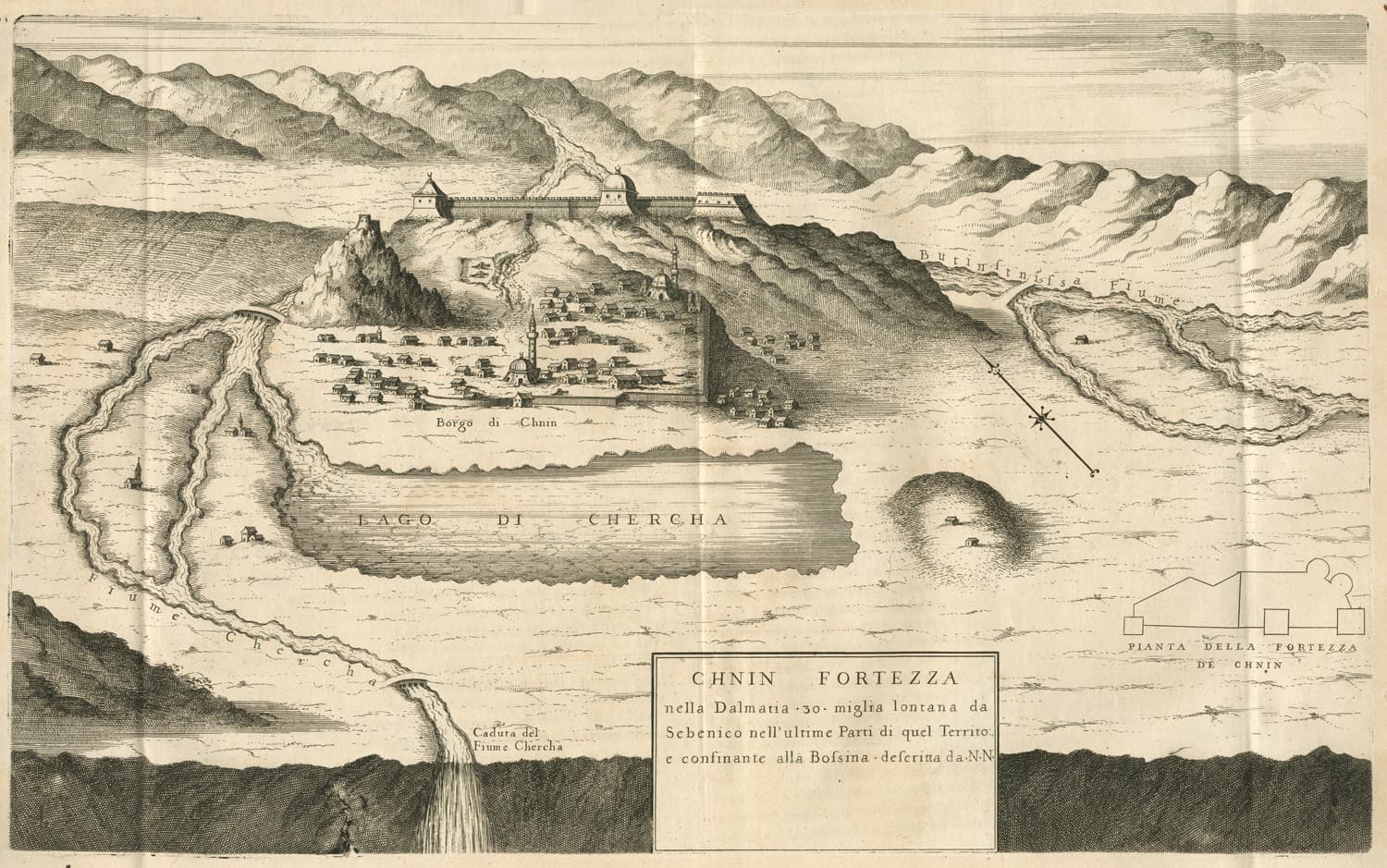
Family and encyclopedic accounts connect Nikola's forces with campaigns around Knin and Vrgorac. In June 1694, Nikola and his surviving documented son Vule participated in the large Venetian operation that captured Čitluk. [Croatian Encyclopedia][Krešić 2006, p. 110]
Klek and Smrdan grad
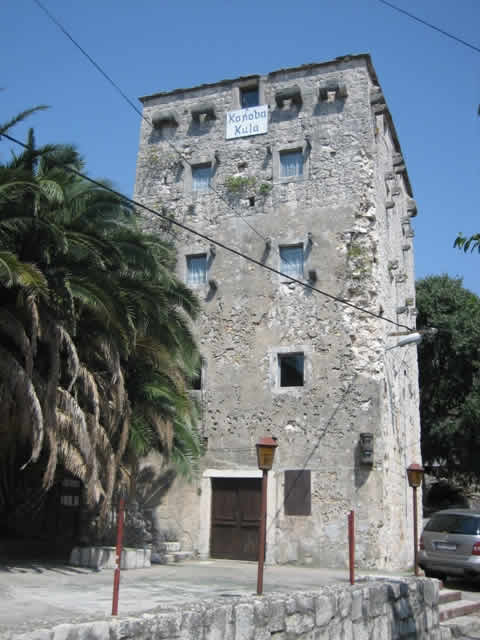
In 1688 Nikola (Generation I) established the family's principal coastal stronghold at Klek. The stone complex served as a refuge, lookout, and defensive position guarding the maritime approach to the Neretva. [Croatian Encyclopedia]
The fortress of Kulina, later known as Smrdan grad, stood high above Klek and controlled an important passage between the coast, the Neretva, and the Dubrovnik hinterland. When Ottoman forces captured it in 1688, Nikola Nonković assembled his men and, with Venetian support, took part in the siege and recapture of the fortress in early 1689. The Nonković role was crucial in recovering this strategic position and incorporating it into the new defensive line along the frontier. [Croatian Encyclopedia]
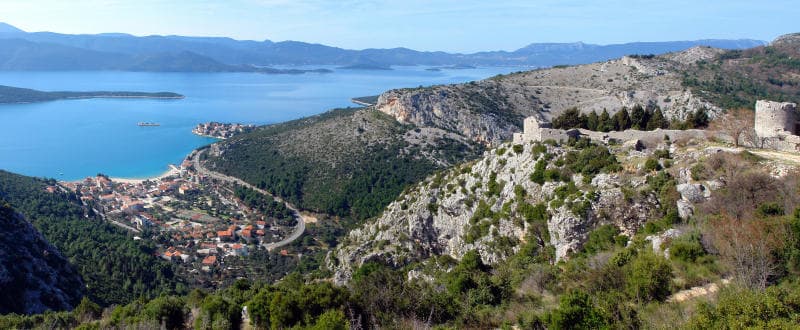
The fighting did not end there. Ottoman forces again attempted to capture the fortress in 1690 and 1691, but Nonković's men repelled them. According to local tradition, after the particularly fierce siege of 1691, the bodies of fallen Ottoman soldiers remained on the approaches to the fortress. The unbearable stench spread across the slopes above Klek, and the old name Kulina was gradually replaced in local speech by Smrdan grad—literally “Stinking Town” (smrdan, “stinking” or “foul-smelling”; grad, “town”). The ruins above present-day Klek therefore preserve not only the remains of a former fortress but also the memory of the bloody fighting through which this stretch of coast was retaken and defended. [Tomić 2006, p. 177]
The patents of the Knights of St. Mark
The courage and loyalty of Nikola (Generation I) reached the highest governing bodies of the Republic. Sources date the honor to 1691/92: the Venetian Senate awarded him the title of Knight of St. Mark—Cavaliere di San Marco—in 1691, and Doge Francesco Morosini confirmed the patent on January 20, 1692. [Croatian Encyclopedia][Čoralić 2007, p. 340]
Lovorka Čoralić shows that the Knights of St. Mark included both patricians and deserving military commanders from families that were not of noble origin. The honor carried the right to knightly dress, arms, a cross, a medallion, and other military distinctions; it did not by itself confer membership in the Venetian patriciate. [Čoralić 2007, pp. 339–341][Čoralić 2007, p. 341]
Nikola was killed in battle near Ljubinje in 1695. His son Vule (Generation II) assumed command and was rewarded for his own continued service. On June 27, 1696, Doge Silvestro Valier issued a new patent extending the title of Knight of St. Mark to Vule and his legitimate descendants as a hereditary distinction. [Tomić 2006, p. 177][Tomić 2006, p. 177]
3. The age of the Superintendents — 1715–1797
Administration of the lower Neretva
As the frontiers stabilized after the long wars, the family converted military authority into civil power. In 1715 Knight Vule Nonković (Generation II, son of Serdar Nikola) was appointed Supreme Superintendent (Italian: sopraintendente) of the Neretva Frontier—the most influential administrative office in the lower valley. [Croatian Encyclopedia]
The Superintendent oversaw civil government, frontier logistics, customs, trade taxes, and local justice. For nearly a century the office remained closely associated with the Nonkovic family. [Croatian Encyclopedia]
After Vule's death in 1734, his son Luka (Generation III) held the position until 1752. Luka's brother Ivan (Generation III, also a son of Vule) served as Vice-Superintendent from 1752 to 1763. Later in the century Luka's sons Ante and Jakov (Generation IV) occupied leading positions, with Jakov remaining in service until 1806. [Croatian Encyclopedia][Tomić 2006, pp. 177–178]
Estates and the hereditary title of Conte
Military service and decades of frontier administration brought the family substantial landholdings. Venice distributed liberated lands and estates abandoned during the war to deserving soldiers, and the Nonkovic family acquired property across Zažablje, Opuzen, Klek, and the surrounding region.
The family lineage chart records that around 1773 Nikola Nonković (Generation VI, son of the Generation V Luka)—a descendant of the first Serdar Nikola—received or had confirmed the hereditary title of Conte. [Duško Nonković lineage chart, 1999]
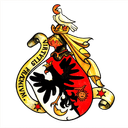
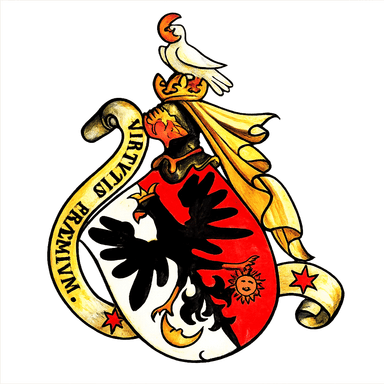
Independent published evidence appears in Friedrich Heyer von Rosenfeld’s 1873 armorial. He lists the family under the heading “Conte Noncovich,” describes its arms and motto, and identifies it as an old noble family originating from the Neretva. This strongly confirms that the comital position and family heraldry were recorded in the nineteenth century, although Rosenfeld did not identify the original Venetian patent or its date. [Rosenfeld 1873, p. 65]
According to family tradition, the title was not formally confirmed within the Austrian nobility system after the fall of Venice, but remained in family and local usage into the twentieth century. The absence of recognition by a successor state does not erase a historical grant made by an earlier sovereign; fully establishing its legal and genealogical succession nevertheless requires the original Venetian patent and a documented connection between its holder and later generations. Rosenfeld’s statement that the noble branch had become extinct remains an unresolved question about the genealogy available to him. [Rosenfeld 1873, p. 65][Duško Nonković lineage chart, 1999]
Architectural and sacred heritage
The family's eighteenth-century power left a visible legacy in stone. At Klek they expanded Kula Nonković, a great three-story defensive structure with massive stone frames, gun loops, and machicolations through which defenders could shower attackers with stones or heated material. Beside it stood the Chapel of St. Nicholas, a place of worship and a sign of the family's permanent presence. [Tomić 2006, p. 177]
For their final resting place the family turned to the small island of Osinj at the mouth of the Neretva, granted to them by Venice in 1744. There the ancient single-nave Church of St. John the Baptist became a private family sanctuary. [Tomić 2006, p. 177]
The family reinforced the church and created burial vaults beneath its floor. According to family tradition, Vule, Luka, Ivan, and other members of the lineage were laid to rest in these island crypts, permanently joined to the waters of the Neretva they had once defended and governed. [Tomić 2006, p. 177][Duško Nonković lineage chart, 1999]
Naldi's portraits of Luka and Ivan Nonković — Generation III
The Florentine painter and Venetian soldier Filippo Naldi lived at Opuzen and was proposed as harbour master of the Neretva in 1760. Among his most important secular works are portraits of the brothers Luka and Ivan Nonković (Generation III, sons of Vule), now preserved by the City Museum of Split. Luka was painted in 1752 and Ivan in 1759. [Tomić 2006, pp. 175–178]
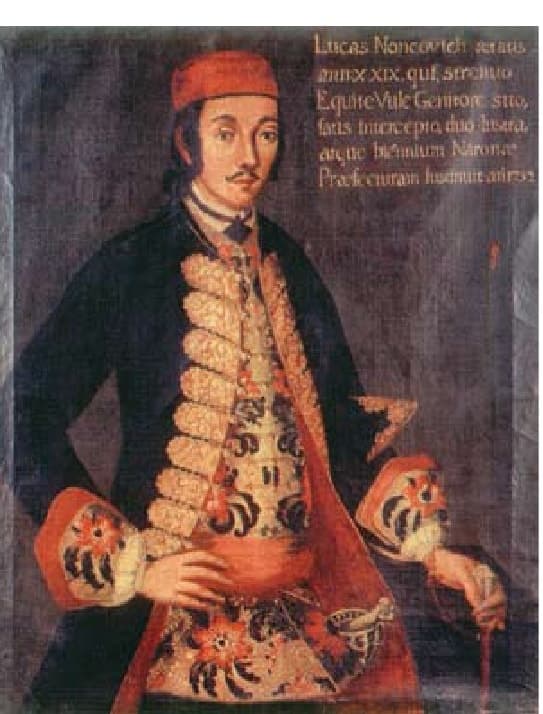
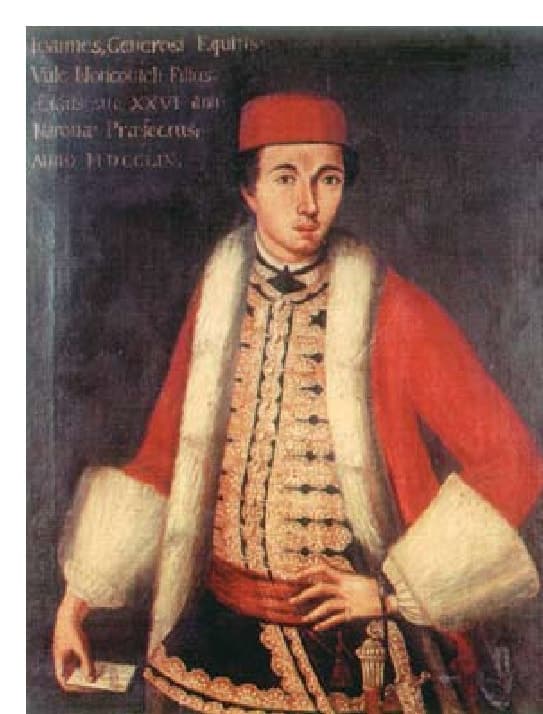
Naldi portrayed them from the waist up, armed with swords and dressed in splendid fur-trimmed clothing, red caps, and gold ornament. The inscriptions identify their descent from Knight Vule and their administrative service in the Neretva, making the paintings both works of art and rare visual records of the eighteenth-century family. [Tomić 2006, pp. 177–178]
In the same year as Luka's portrait, 1752, Luka Nonković and the church procurators commissioned Naldi's altarpiece The Stoning of St. Stephen for the parish church at Opuzen. A note on its reverse records that the painting was restored in Venice in 1872 at the expense of Petar Nonković and members of the Nikolić family, evidence that care for this family and church heritage continued into the nineteenth century. [Tomić 2006, pp. 175–178]
4. The fall of Venice and the modern era — 1797 to the present
Frane Nonković — Generation VI and the campaign of 1806
The fall of the Republic of Venice in 1797 destroyed the political world in which the family had built its position. The lower Neretva entered a period of rapid transition between French and Austrian rule, but the Nonkovic military role did not immediately disappear.
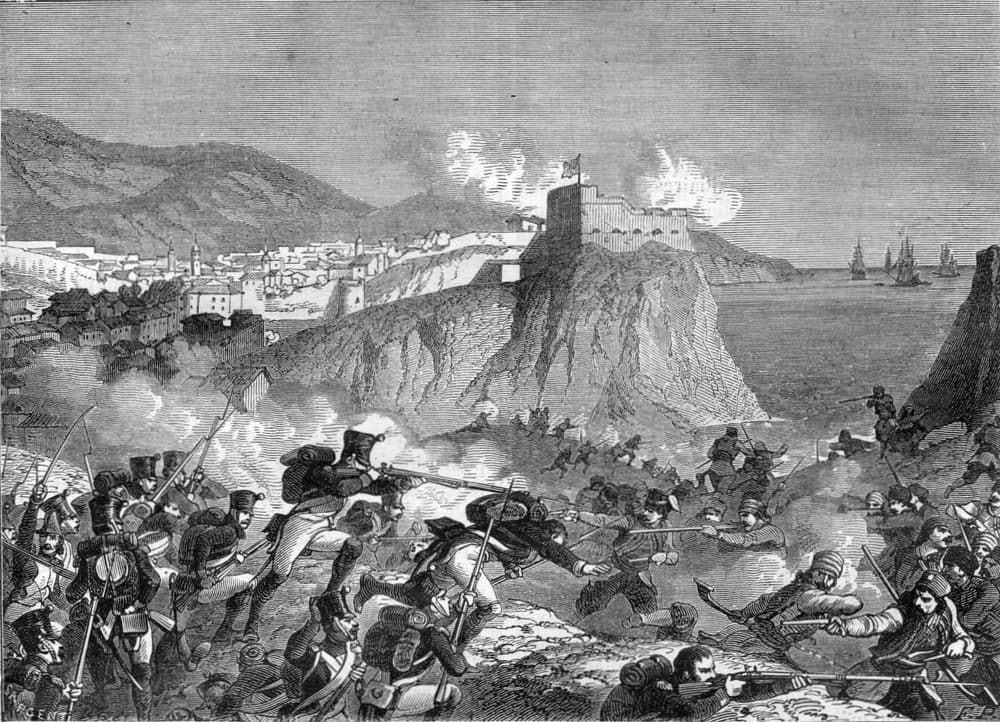
The family lineage chart records that in 1806 Lieutenant Colonel Frane Nonković (Generation VI, son of the Generation V Frane) participated in lifting the siege of Dubrovnik when Petar I Petrović-Njegoš, the Russian fleet, and forces from eastern Herzegovina attempted to take the city. [Duško Nonković lineage chart, 1999]
Family oral tradition preserves a vivid episode from the same campaign: Frane is said to have ordered his cavalry to cross the same mountain ridge above Dubrovnik repeatedly. Seen from a distance, the circling riders appeared to be a much larger relief force, reportedly weakening the besiegers’ resolve. No independent written record of this manoeuvre has yet been identified, so it should be read as family tradition rather than established fact.
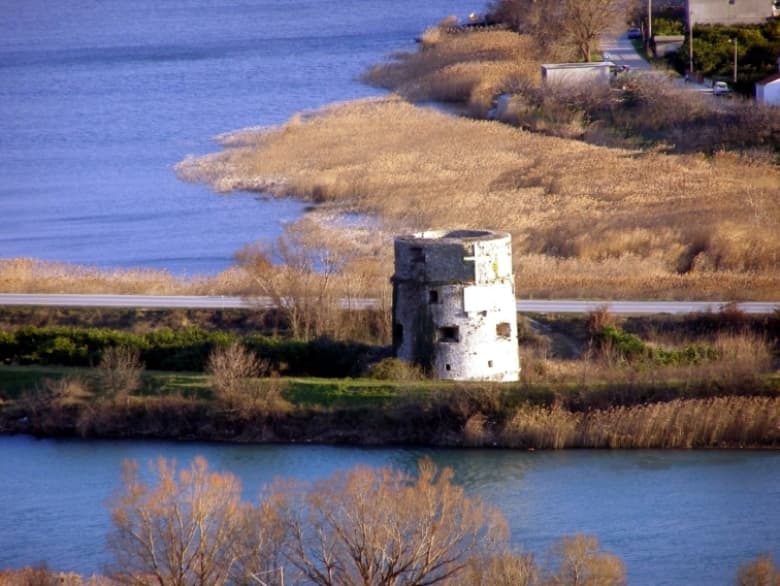
By a decree dated November 14, 1811, Napoleon entrusted Frane with command of Kula Norinska, the key fortress position on the river. [Croatian Encyclopedia]
The refusal to surrender Kula Norinska
Following Napoleon's defeats, Austrian forces advanced into Dalmatia. From Opuzen, Major Marojević sent Frane (Generation VI) a demand on November 30, 1813, ordering the immediate surrender of Kula Norinska. Frane's reply, written inside the fortress on January 2, 1814, left no room for negotiation. [Croatian Encyclopedia]
He held the tower for a further six months. Only after persistent persuasion by his immediate family and Franciscan friars traveling from Zaostrog did he agree to abandon the position.
Even then, he did not surrender everything under his command. Before departing, he had his artillery cannons sunk in the Neretva and the state papers, treasury chest, and military flag buried at the fortress of Gabela, denying them to the new authorities.
The Croatian Encyclopedia records that Frane lost his position because he refused to surrender but was later rehabilitated. He then remained in service as Serdar of the Lower Neretva until 1844, extending the documented public service of this family branch well into the nineteenth century. [Croatian Encyclopedia]
“At any cost, military duty not only forbids me from surrendering the Tower, but also prevents any further correspondence of this kind.”
From the nineteenth century to the present day
The fortress later returned to family hands. When the Austrian authorities placed it at public auction, it was purchased by Niko Nonković (Generation VIII, grandson of the Generation VI Frane), who adapted the old military tower for use as a windmill. [Duško Nonković lineage chart, 1999]
This marked the end of an era in which the family's history had been recorded chiefly through wars, fortresses, and hereditary administrative offices. After the Venetian order disappeared, Nonkovic descendants lived under the Austrian Empire and Austria-Hungary, then through the Yugoslav states, two world wars, socialist Yugoslavia, and finally independent Croatia.
The family lineage chart shows the historic line continuing through numerous connected branches during the nineteenth and twentieth centuries, reaching descendants recorded around the year 2000. A family once gathered around a single frontier commander therefore entered the twenty-first century as a large, extended family. Its descendants now live in Croatia, Slovenia, Bosnia and Herzegovina, other countries of the European Union, the United States, and elsewhere around the world, connected by their shared origins and Nonkovic heritage. [Duško Nonković lineage chart, 1999]
The family lineage chart
In December 1999 Duško Nonković completed a large hand-drawn lineage chart. Drawing on local archives, parish registers, and available manuscripts, he connected the line from the generations following the 1687 migration to the family's modern descendants.
Sources and directions for further research
This list identifies sources and collections used or associated with the family narrative. It is not a complete scholarly critical apparatus.
- The Croatian Encyclopedia — Nonković. View
- The family lineage chart compiled by Duško Nonković in December 1999.
- Friedrich Heyer von Rosenfeld, Der Adel des Königreichs Dalmatien, 1873 — Conte Noncovich, heraldic description, and motto, p. 65 and plate 42. View · PDF
- Lovorka Čoralić, Zadar Inhabitants—Cavaliers of Saint Mark (17th Century), 2007 — Nikola Nonković and the insignia of Venetian knighthood, pp. 339–341. View · PDF
- Radoslav Tomić, The Painter Filippo Naldi, 2006 — portraits of Luka and Ivan Nonković and related family evidence, pp. 175–178. View · PDF
- Milenko Krešić, The Historical Circumstances and Foundation of Dubrave Parish, 2006 — negotiations, migration, and reprisals, pp. 107–111. View · PDF
- Trpimir Macan, Iz povijesti Donjega Poneretavlja, 2nd expanded edition, Zagreb–Klek, 1990. View
- Mile Vidović, ed., Don Radovan Jerković – život i djelo, Matica hrvatska, Metković, 2000. View
- Hinko Hranilović and Dragutin Hirc, Prirodni zemljopis Hrvatske, 1905 — the Nonković family and the Neretva, pp. 619–620. View · PDF
- Andrija Kačić Miošić, Razgovor ugodni naroda slovinskoga, 1801 edition — Nikola Nonković in the Song of the Knights of the Neretva, p. 231. View · PDF
- State Archives in Zadar — records of the Provveditori Generali and land registers.
- State Archives in Dubrovnik — senate, diplomatic, and frontier correspondence.
- Archivio Storico di Propaganda Fide in Rome — guidance for locating episcopal reports and records connected with the Noncovich family. View · Archive
- Archivio di Stato di Venezia — guidance for locating records concerning Nikola and Vule Noncovich. View · Archive
- Kula Nonković — an online overview of its architectural and regional heritage.
This is a working family history. Corrections, documents, and additional testimony from family members are welcome.